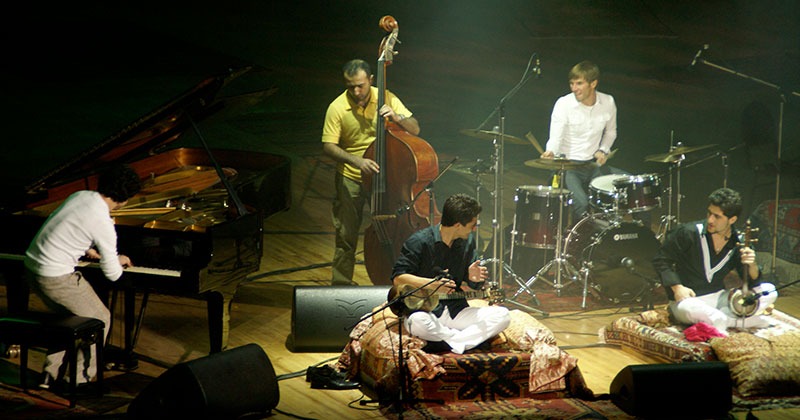


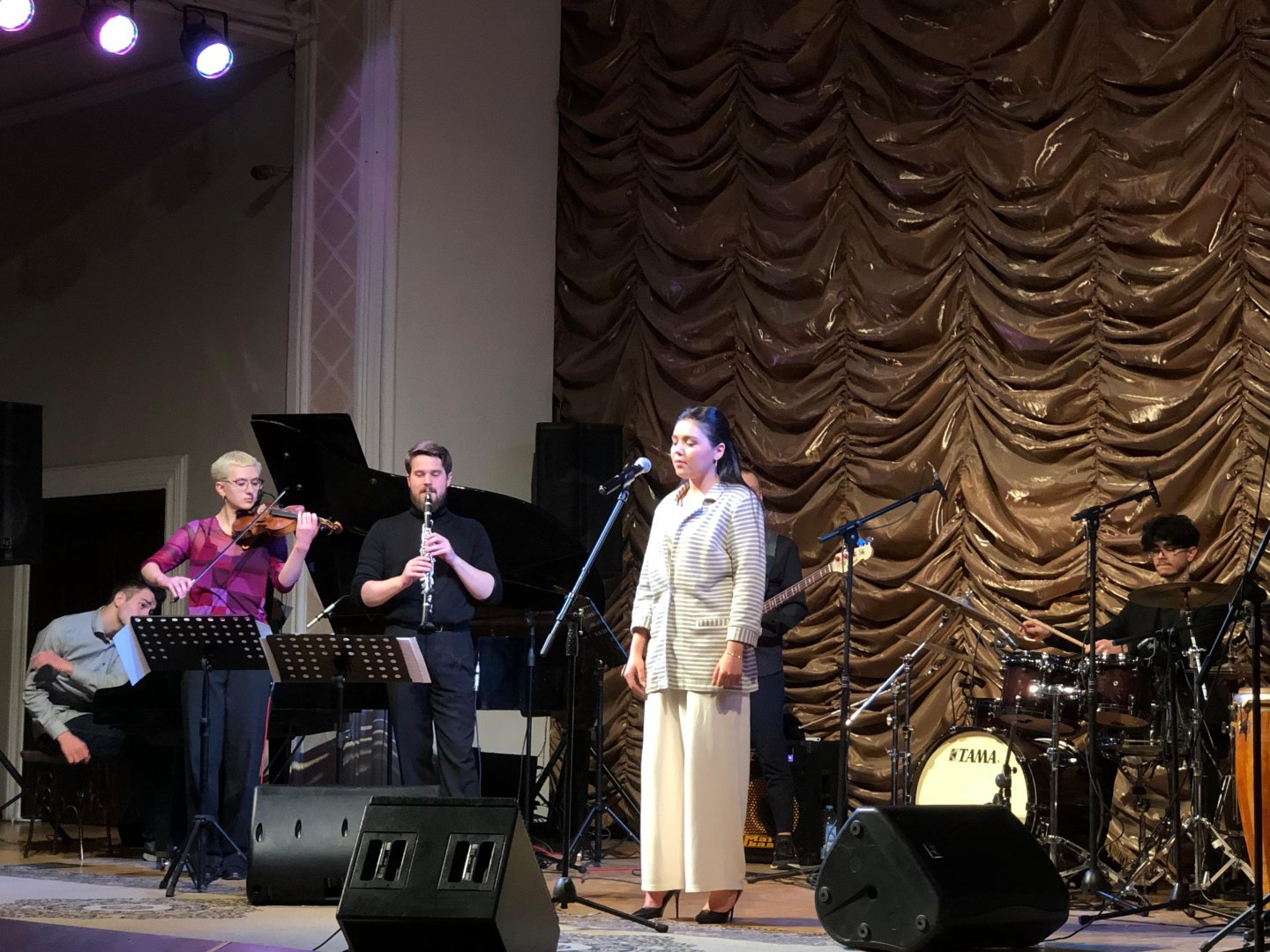
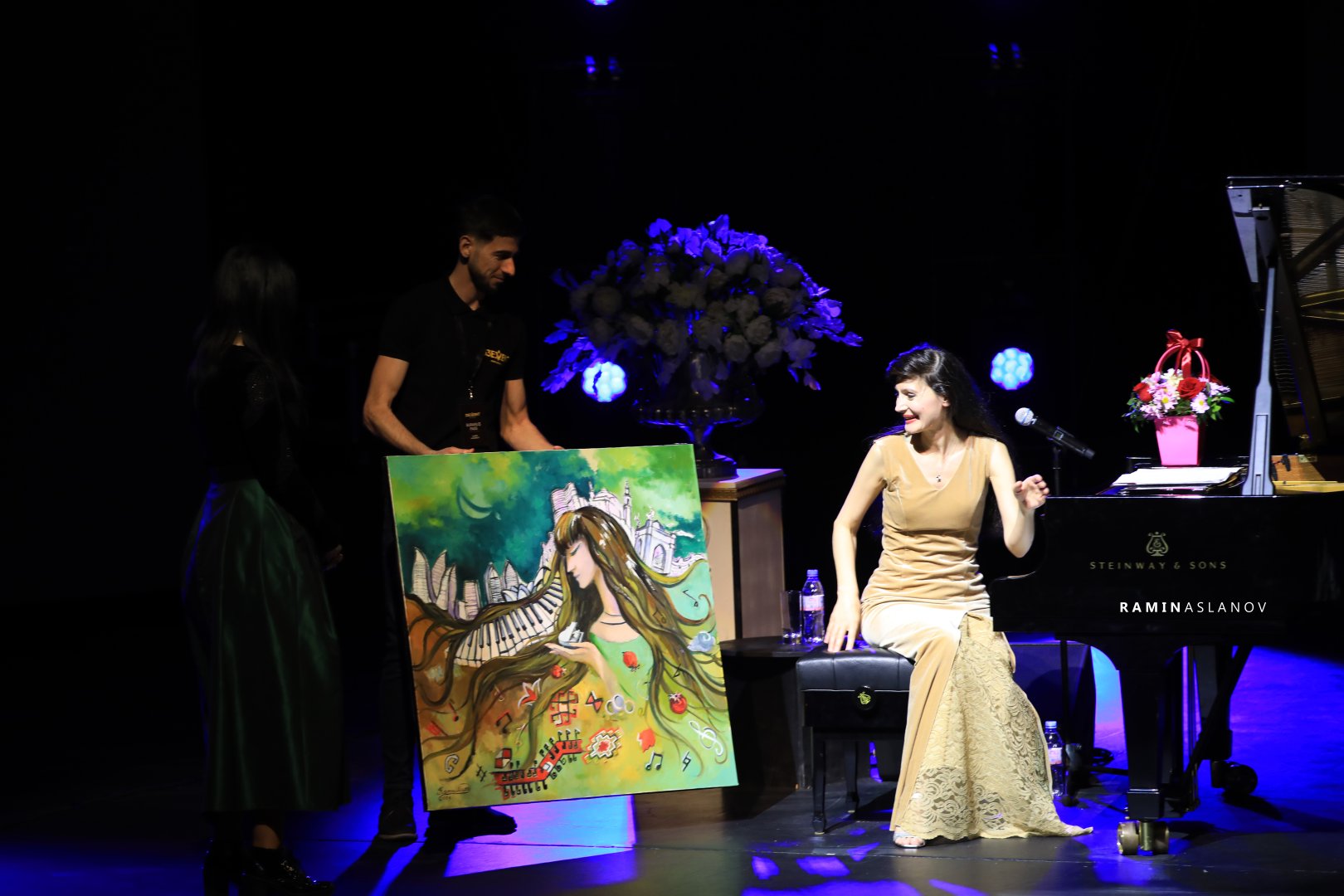
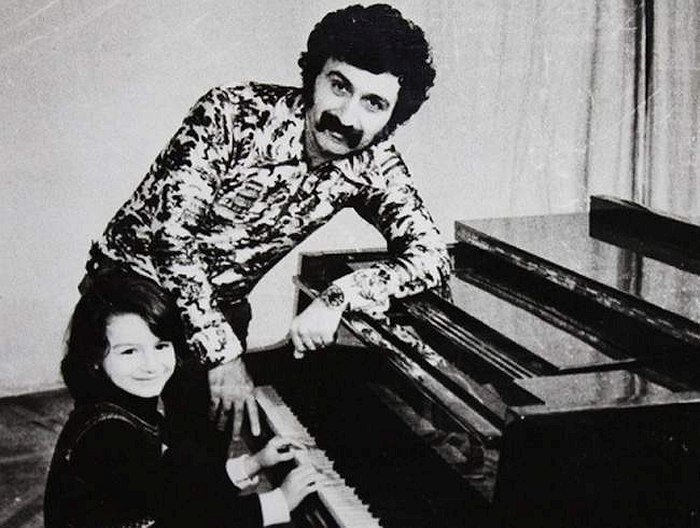
Vagif Mustafazade with Aziza
The path of Mustafazade family is continued by young Ramiz Khan, son of Aziza and grandson of Vagif, a very talented pianist and composer.
In an exclusive interview Aziza Mustafazade shared her thoughts
Aziza, you live in Mainz. Why did you choose this city to live in Germany?
Mainz is a twin city with Baku, which is located on the same meridian. It's fate. “You can't escape fate” is the name of one of the compositions of the great Vagif Mustafazade.
You have performed at a number of jazz festivals in Germany, held concert programs. Can you tell us about the most memorable moments of one of your concerts?
Perhaps one of the moments was the most unforgettable. During the performance of Vagif Mustafazade's composition “All Alone” - a young man sobbed in his voice and left the hall.
What does a typical German jazz lover look like? Are there any peculiarities of performing on the jazz scene in Germany?
The German audience is very knowledgeable, even on the outskirts of the country. They know how to listen. And most importantly, the audience comes to listen not because of curiosity, but because they love a particular artist.
How has life in Germany and German culture in general influenced your creativity?
Very positively. I was surrounded by the right people at the right time. Besides, Germany is Bach's homeland. As my Father used to say, “Without Bach there is no Jazz”.
What do you do in Germany when you're not doing jazz? What are your hobbies? What is your favorite thing to do in Germany?
I love nature and animals very much. I dream to create an Animal Rescue Fund in Azerbaijan.
What can you tell about Trio CD album “Generations”? What compositions are included in it, in what style it is made? Under what label was it presented to the listeners?
Jazziza Records is my label, created in 2006. The CD "Generations" includes compositions by my father, my son and myself. The idea came when my three year old son started humming melodies to me. When I was picking up the chords he would tell me which ones were right...
Are you happy that you had the opportunity to share the stage with both father and son. Can you describe that feeling to us? Your son must have grown up in a very different jazz atmosphere. How has German culture and art influenced him?
Yes, I'm grateful to God for such happiness. “Words Can't Tell” is the title of one of Vagif Mustafazade's pieces.
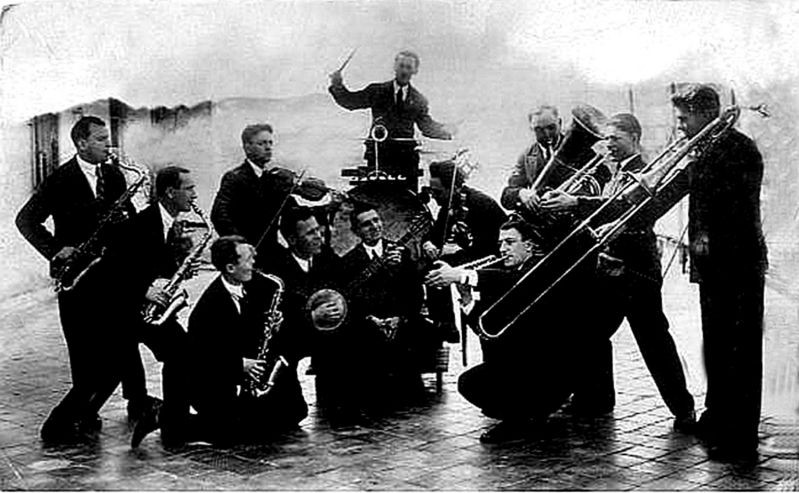
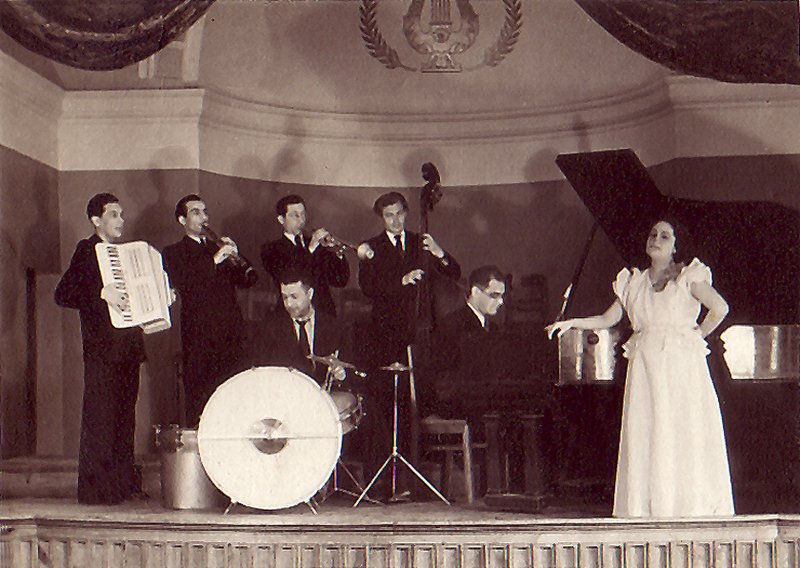
Now let's plunge into the history of Azerbaijani jazz, which dates back to the 30s of the XX century. The first jazz orchestra in Baku in 1938 was created by famous composers Niyazi and Tofig Guliyev, who in his youth performed with the first jazz orchestra of the USSR, the orchestra of Alexander Tsfasman. The State Pop Orchestra (also called the State Jazz Orchestra) became the foundation of Azerbaijani jazz. In 1941-1945 and after the end of the Great Patriotic War the head of the State Pops Orchestra was Rauf Hajiyev. In 1945, Eddie Rosner's Jazz Orchestra toured Baku, the leading soloist of which was a saxophonist born in Baku Parviz Rustambekov, one of the first jazz improvisers in the USSR. He was even called the Soviet Benny Goodman.
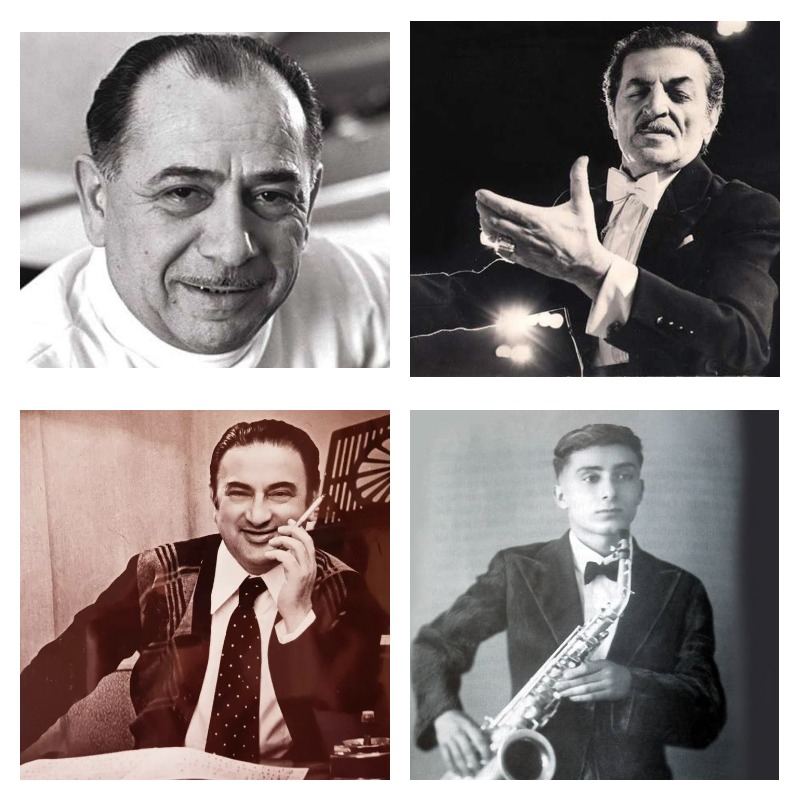
Niyazi, Tofig Guliyev, Rauf Hajiyev, Parviz Rustambekov
In the 60s, with the support and guidance of composers Gara Garayev, Niyazi, Tofig Guliyev and Rauf Hajiyev, the second life of pop and jazz music began in Azerbaijan. The ensemble "Gaya", which at that time included Teymur Mirzoyev, Arif Hajiyev, Rauf Babayev and Lev Elisvetsky, as well as the quartet of Rafig Babayev and Vagif Mustafazade. In the 60s, the head of the Jazz Orchestra of Radio and Television of Azerbaijan was Tofig Ahmadov, who had previously played saxophone in the Moscow orchestra of Eddie Rosner. Famous singer Muslim Magomayev started his career in his orchestra, and as the only soloist he performed with the band as a member of the Soviet delegation at the VIII World Festival of Youth and Students in Helsinki.
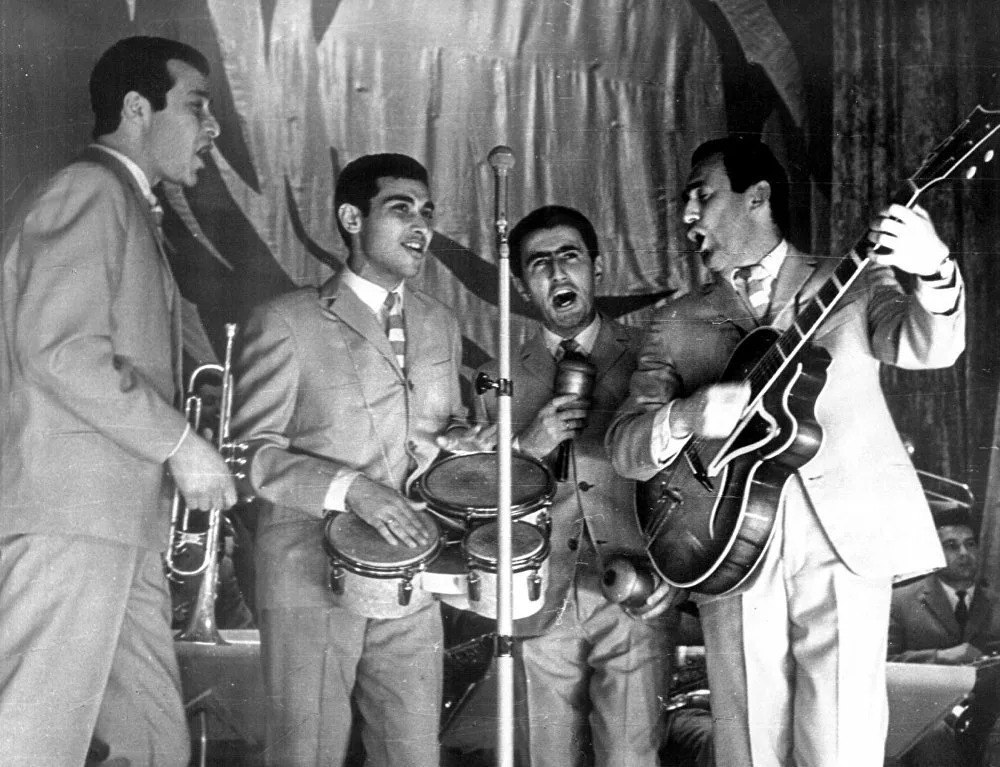
Ensemble "Gaya"
The first jazz festival in Baku was held in 1969, giving a powerful impetus to the development of pop and jazz, brought to the stage a whole pleiad of talented bands, musicians and composers who enriched many musical groups of the former USSR. A whole pleiad of jazz artists and groups appeared. In those years, such musicians as Natavan Sheikhova, Rafig Seyidzade, Vladimir Tartakovsky and others shone.
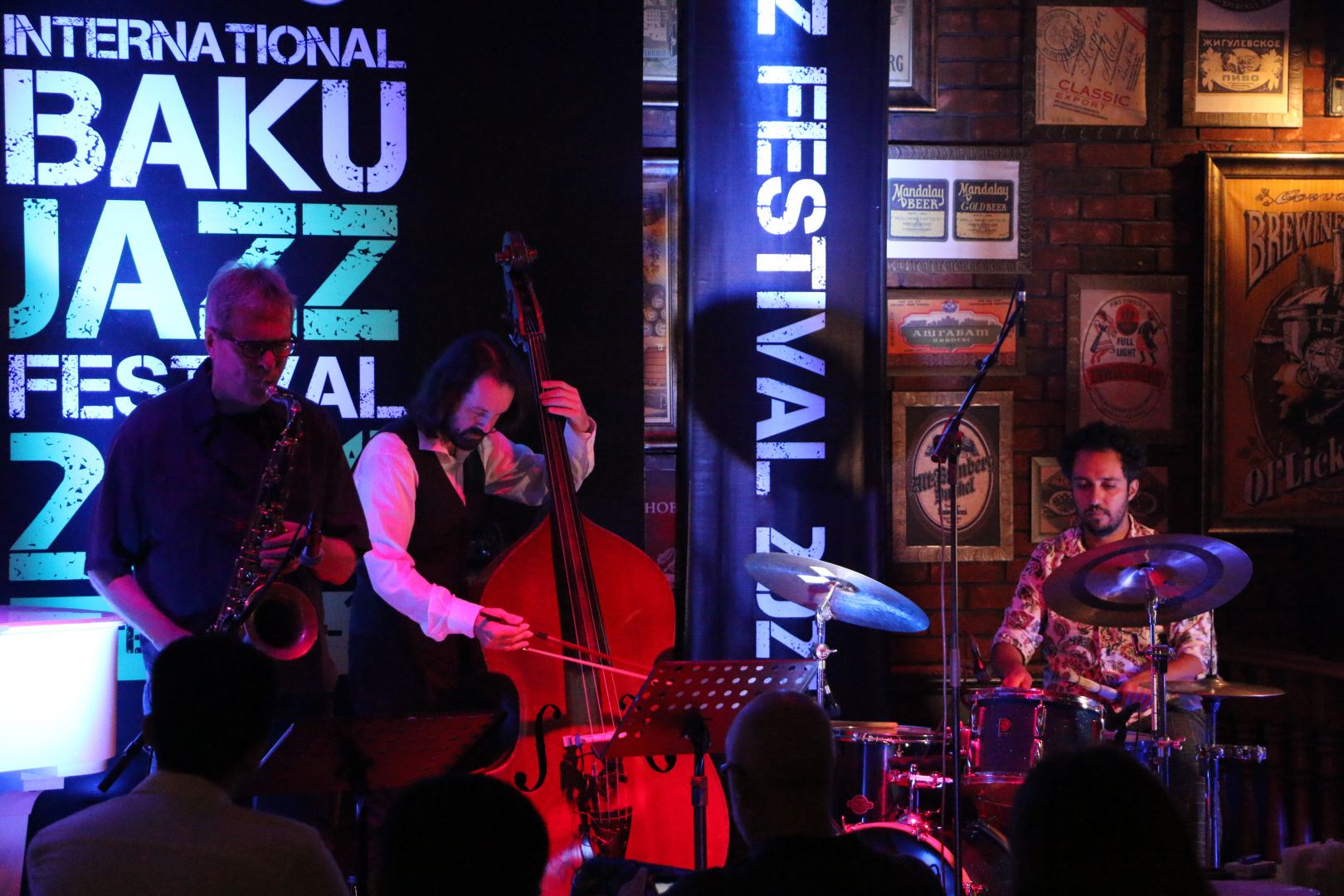
Azerbaijani jazz continues to develop dynamically today, various events and concerts with the participation of world celebrities are organized. Azerbaijani jazzmen are participants and winners of many international jazz festivals and competitions. Jazz in our country has a rich history, continues its traditions, and nowadays a great contribution to its development and success in the international arena belongs to such musicians and composers as Rahin Sultanov, Jamil Amirov, Isfar Sarabski, Salman Gambarov, Shahin Nowrasli, Emil Afrasiyab, Emil Ibrahim, Elchin Shirinov and others.
We congratulate you on International Jazz Day and wish further development in this field between Azerbaijan and Germany.