

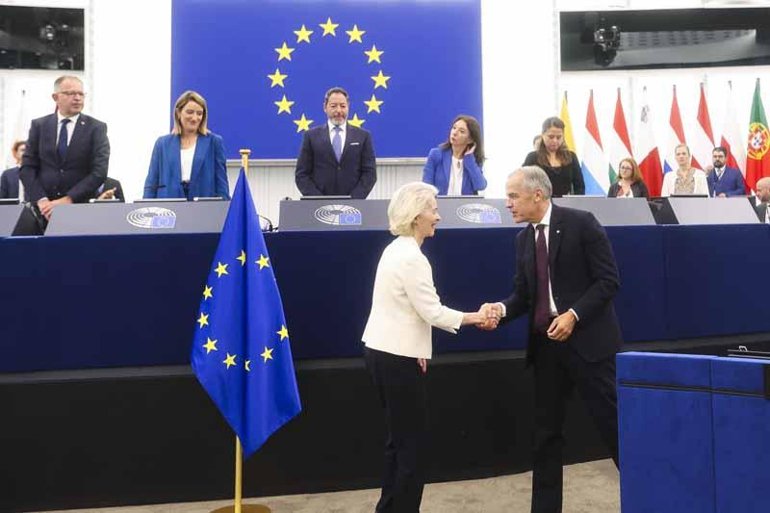
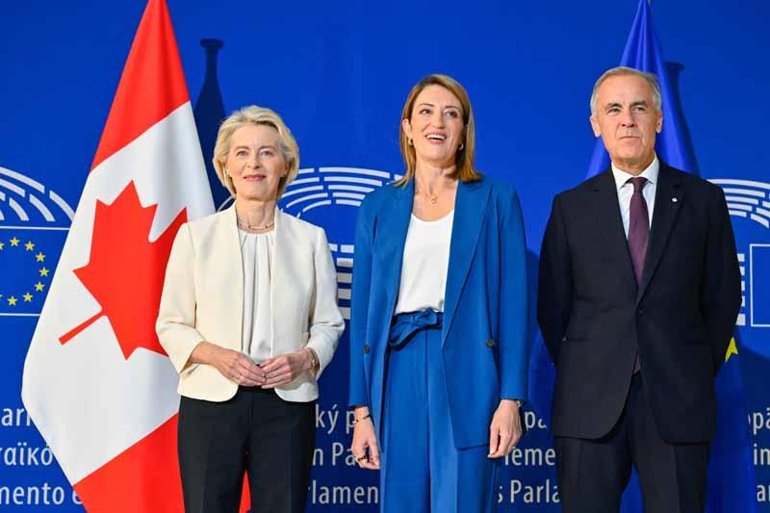
European Union (EU) Commission President Ursula von der Leyen delivered the annual 'State of the Union' address, which outlines the Commission's priorities for the coming year, at the center of the European Parliament's plenary session in Strasbourg. Addressing Canadian Prime Minister Mark Carney, who was present in the hall, von der Leyen expressed her desire to work together to make Canada the EU's first associate member. Emphasizing that they see the world through the same lens on issues ranging from artificial intelligence to climate change, from the Arctic region to geopolitics, von der Leyen stated her intention to elevate relations with Canada to 'the highest possible level.'
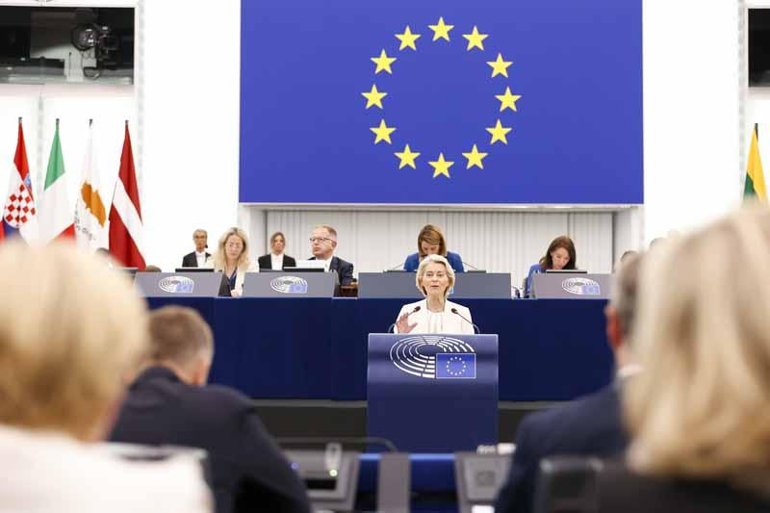
Von der Leyen stated that the ties between the EU and Canada should go beyond the level of the Comprehensive Economic and Trade Agreement (CETA), and noted that they aim to establish an 'Alliance for the Future' covering manufacturing, technology, defense, the Arctic, energy, critical raw materials, and artificial intelligence.
EUROPEAN SECURITY COUNCIL AND ARTICLE 4 PROPOSAL
Proposing new steps in the field of security, von der Leyen suggested a structure inspired by NATO, which she described as 'Europe's own Article 4.' The proposal envisages that in situations where a member country faces a serious security threat that does not reach the level of an armed attack, EU countries would convene for consultation. Von der Leyen also called for the creation of a 'European Security Council' that would include partners such as Canada, Norway, Ukraine, and the United Kingdom, alongside EU leaders.
COMBATING IRREGULAR MIGRATION AND THE CEUTA EXAMPLE
Addressing the issue of migration, von der Leyen referred to the crisis in Ceuta, Spain's territory in North Africa, this summer, and stated that they would propose a 'European Emergency Response Framework' that allows limited flexibility in standard procedures under strictly defined emergency conditions. She pledged to strengthen the border protection agency Frontex, accelerate returns, develop early warning systems, and deepen cooperation with third countries, stating, "We Europeans decide who comes to our Union and under what conditions."
RESTRICTIONS ON SOCIAL MEDIA FOR CHILDREN
Announcing that the Commission will present the 'EU Kids Act' tomorrow, von der Leyen stated that under this law, the use of social media by children under 13 will be banned, and those under 15 will be prohibited from opening personal accounts. It was noted that children aged 13 to 15 will only be able to have limited accounts under parental supervision, and platforms will face mandatory safety design requirements for users aged 15 to 18.


