

Azerbaijan making waves in global logistics through North-South corridor (PHOTO)
In recent years, Azerbaijan has made significant strides in the development of transportation corridors. The country’s geographic position has turned it into a key player in the game, serving as a vital link between Europe and Asia. The moves made by Azerbaijan in this arena not only boost the logistics and trade prospects of the region but also hand the country a leg up in economic and geopolitical clout.
Azerbaijan's active role in the Trans-Caspian International Transport Route (also known as the Middle Corridor) contributes significantly to the region's development as a logistics and trade center, deepening economic cooperation and raising the country's importance in global trade relations. This initiative strengthens Azerbaijan's international economic standing and further elevates its strategic role. The country’s location on the North-South international transport corridor promises significant prospects in trade, logistics, and freight transport.
On February 11, 2025, President of the Republic of Azerbaijan Ilham Aliyev signed a decree approving the “Agreement between the Government of the Republic of Azerbaijan and the Government of the Russian Federation on Cooperation in the Development of Transit Cargo Transportation via the North-South International Transport Corridor.” This marks Azerbaijan’s deep commitment to the project. In recent months, initiatives like the "Action Plan for Increasing Transit Potential and Promoting Transit Cargo Transportation along International Transport Corridors Crossing Azerbaijan (2024-2026)" and the "State Program for Improving Transport Infrastructure in Baku and Surrounding Areas (2025-2030)" have been adopted, demonstrating the government’s focus and expectations for the transport sector.
The North-South transport project, launched in 2000 with a treaty signed between Russia, Iran, and India in St. Petersburg, saw Azerbaijan’s involvement begin in 2005. Currently, cooperation between Russia and Azerbaijan, which plays a crucial role in developing bilateral economic relations, aims to increase cargo transportation, enhance infrastructure along the corridor, simplify border-crossing procedures, and other matters that are priorities for both countries.
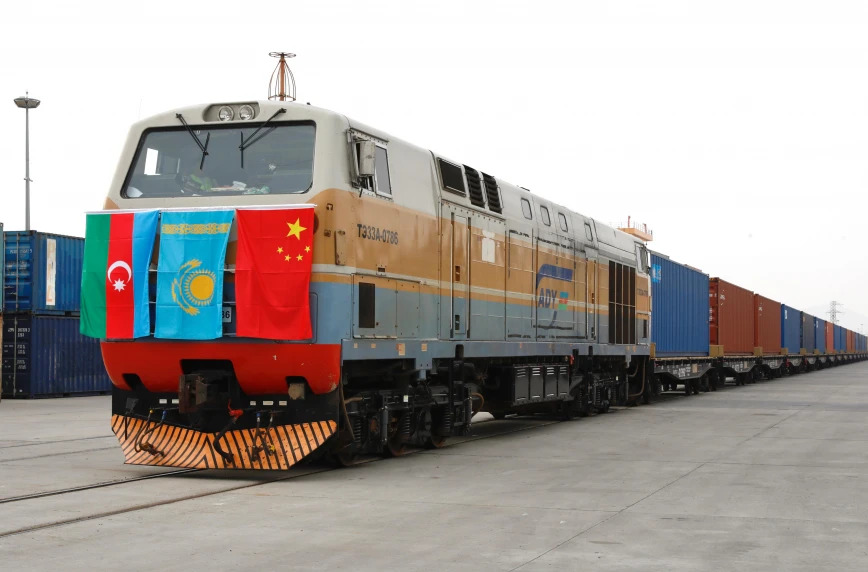
Economists are saying that these developments are a sign of good things to come for transport and transit relations down the road.
Azerbaijani MP and economist Vugar Bayramov stated in an interview with Trend that Azerbaijan has been a significant contributor to the expansion of international transport corridors. He explained that both the Middle Corridor (West-East) and the North-South Corridor passing through Azerbaijan not only strengthen the country's geopolitical position but also directly affect state revenues.
“The North-South corridor stretches from the north to India, and its transfer capacity and freight transportation distance are quite vast. Since the corridor provides access to both India and the Persian Gulf via Iran, this naturally opens up more opportunities for freight transport,” Bayramov said.
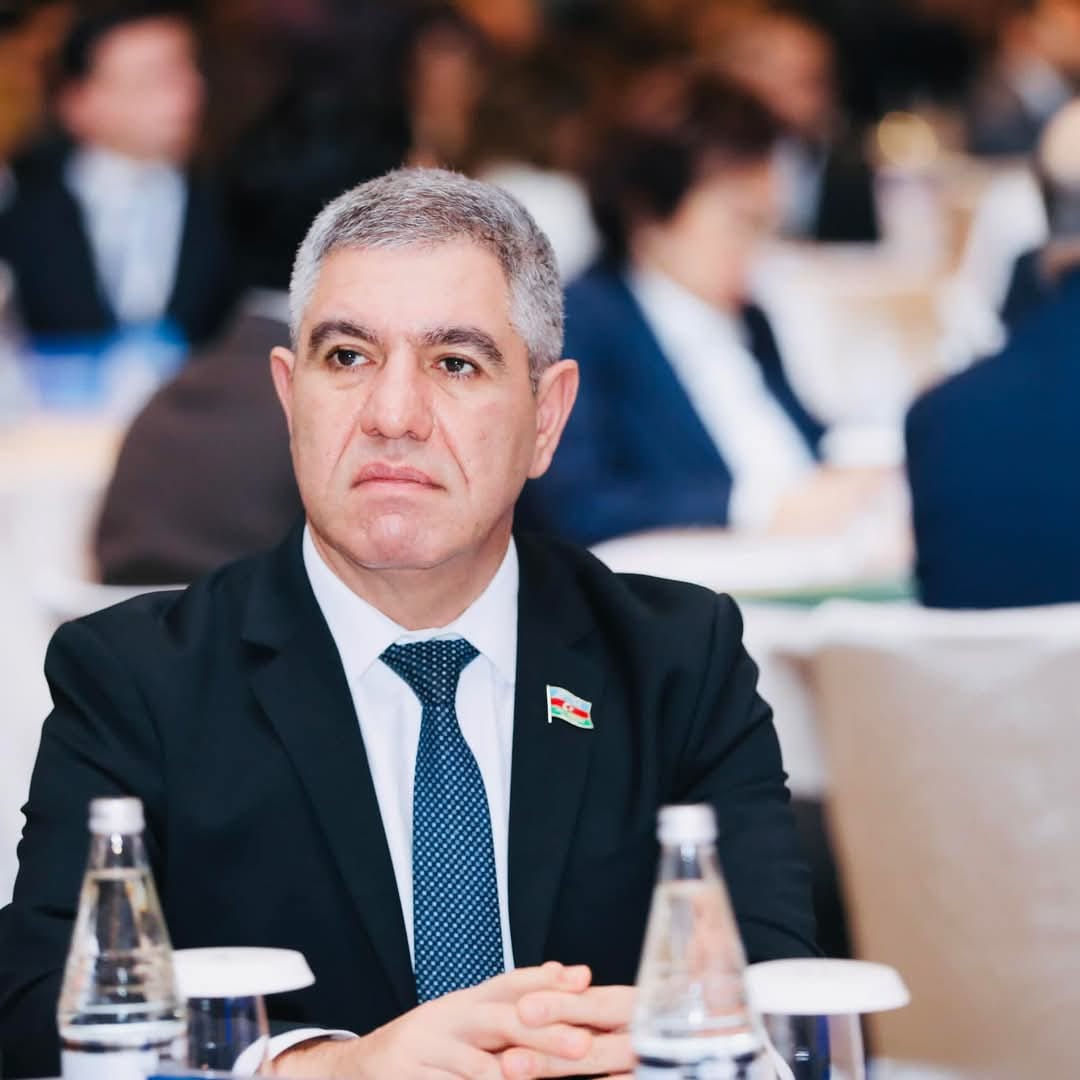
According to the MP, the North-South corridor definitely creates new opportunities for increasing revenue from international freight in Azerbaijan's non-oil sector.
“This is crucial for increasing state revenues, transporting more goods through Azerbaijan, and opening up new markets for non-oil products made in Azerbaijan. Certainly, stimulating the development of the non-oil sector through transport corridors is one of the priorities of the country’s transport policy,” Bayramov added.
It is important to note that, under President Ilham Aliyev's decree from December 7, 2015, the construction of a new 8.3-kilometer railway section from Astara (Azerbaijan) to the bridge over the Astarachay River, along with a railway bridge, and 1.4 kilometers of road to the cargo terminal on Iranian territory, has been completed. It is predicted that the full operation of the corridor will significantly increase Azerbaijan's transit revenues in the future.
In a statement to Trend, economist Eldeniz Amirov also provided a historical perspective on the North-South corridor. He recalled that the government agreement signed on September 12, 2000, between Russia, Iran, and India laid the foundation for the project.
"In general, the origins of this corridor trace back to the late 20th century, initially as the North-South dialogue. However, after the cold relations between Russia (at that time the Soviet Union) and Europe, the route was changed, bringing it through the Red Sea and the Atlantic Ocean to reach Northern Europe. Recently, Russia proposed a new, shorter route for the North-South corridor," Amirov said.
The economist pointed out that Azerbaijan, by putting pen to paper on the agreement in 2005 to kickstart the North-South corridor, was the first to throw its hat in the ring for this construction endeavor.
"In this context, Azerbaijan has made significant contributions. The country has the best infrastructure indicators among the countries along this corridor. Since one of the corridor routes passes over the Caspian Sea, another through Asia, and the other through Azerbaijan, the latter is considered the most promising," he added.

He concluded by emphasizing that the diversification of exports, expansion of logistics capabilities, and increasing Azerbaijan's strategic importance are critical benefits for the country, highlighting the importance of the agreement for Azerbaijan’s economy.
"The more corridors there are and the more strategic economic agreements Azerbaijan signs with other countries, the better it will be for the economy. However, we cannot say that the North-South corridor is as beneficial as the East-West corridor for the country," he said.
Note that in 2024, the throughput of transit cargo traversing the Azerbaijani corridor experienced an uptick of 8.4 percent relative to the previous fiscal year, culminating in a total volume of 14.5 million tons
The data obtained from the State Statistics Committee indicates that transportation lines traversing Azerbaijan carried a total of 30.2 million tons of freight between January and November of last year; this figure is 282,000 tons (0.9 percent) more than for the same period of 2023.
Meanwhile, 13.9 million tons, or 46 percent, of cargo was transported by rail, 9.1 million tons, or 30.1 percent, by road, and 7.2 million, or 23.9 percent, by sea transport. Transit cargoes made up 57 percent, totaling 17.2 million tons of the overall transported cargo volume.


