

FAO representative: Agricultural sector is moving in right direction in Azerbaijan – INTERVIEW
Azerbaijan's agricultural sector has demonstrated progressive development in recent years, mirroring the state policy priorities in the areas of economic diversification, food security, and sustainable development.
The ongoing reforms, the introduction of modern agricultural technologies, efforts to support farmers, and the expansion of the green agenda are contributing to enhancing resilience of agriculture against climate and market challenges. Particular attention is paid to the development of climate-resilient production systems, rational management of water and land resources, and the diversification of agricultural and food products.
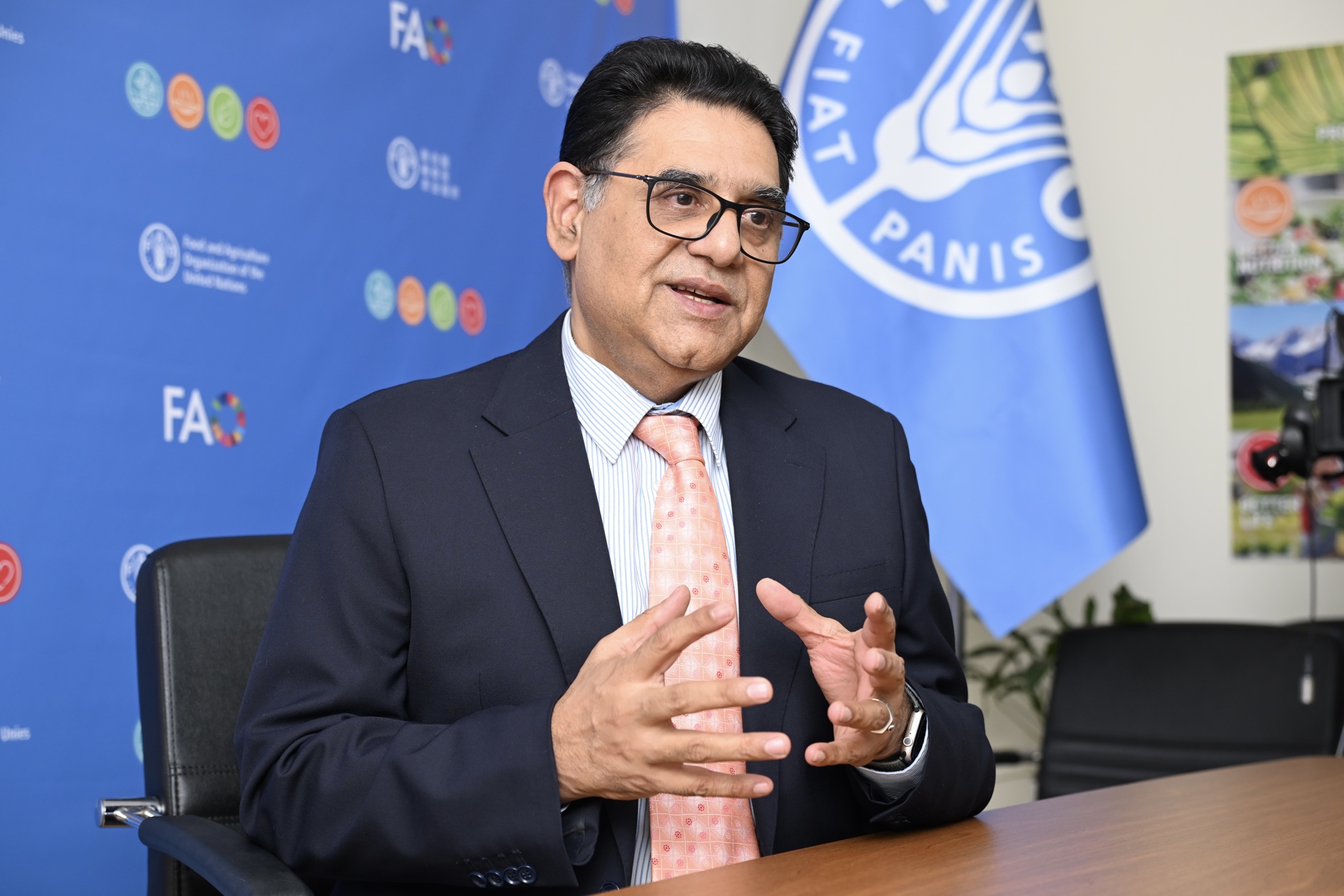
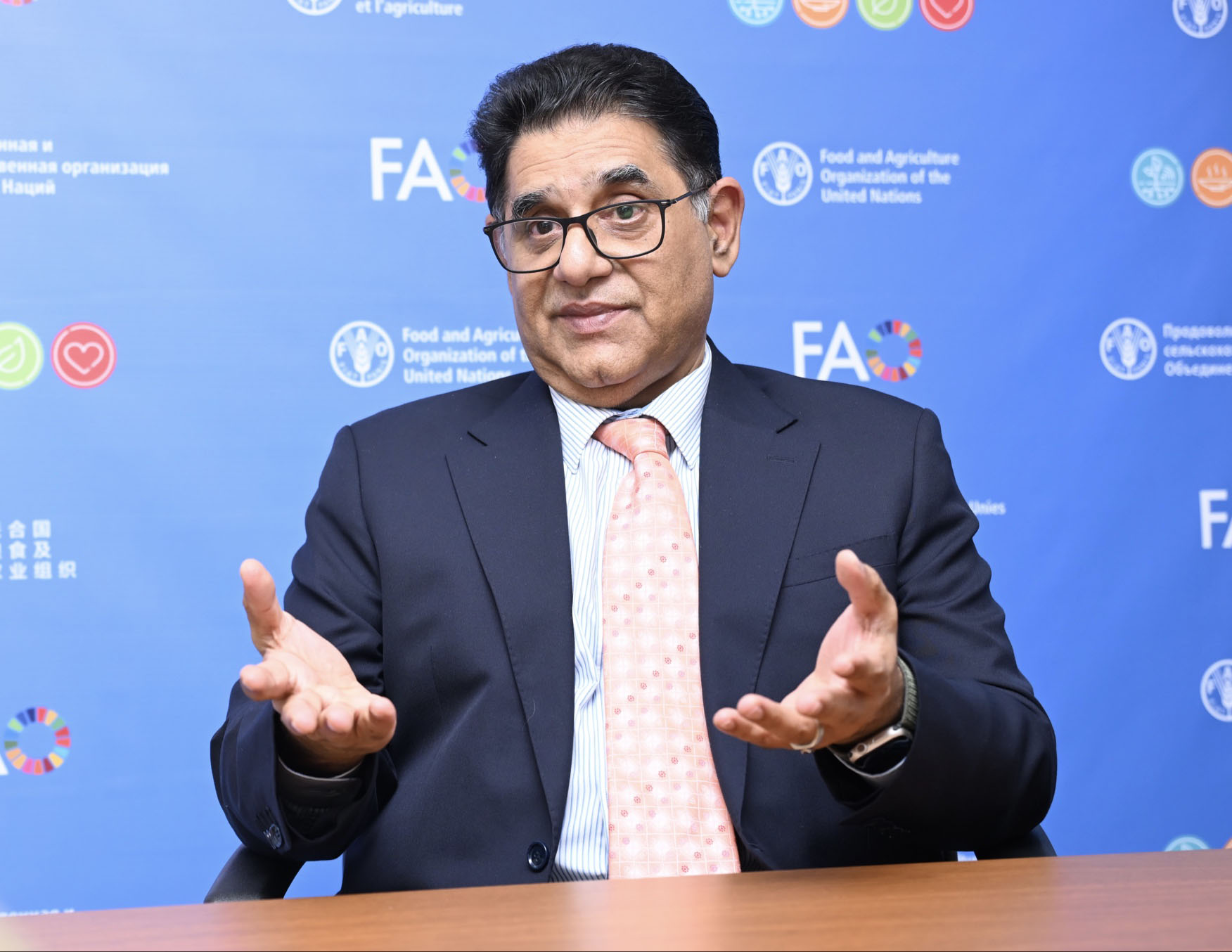
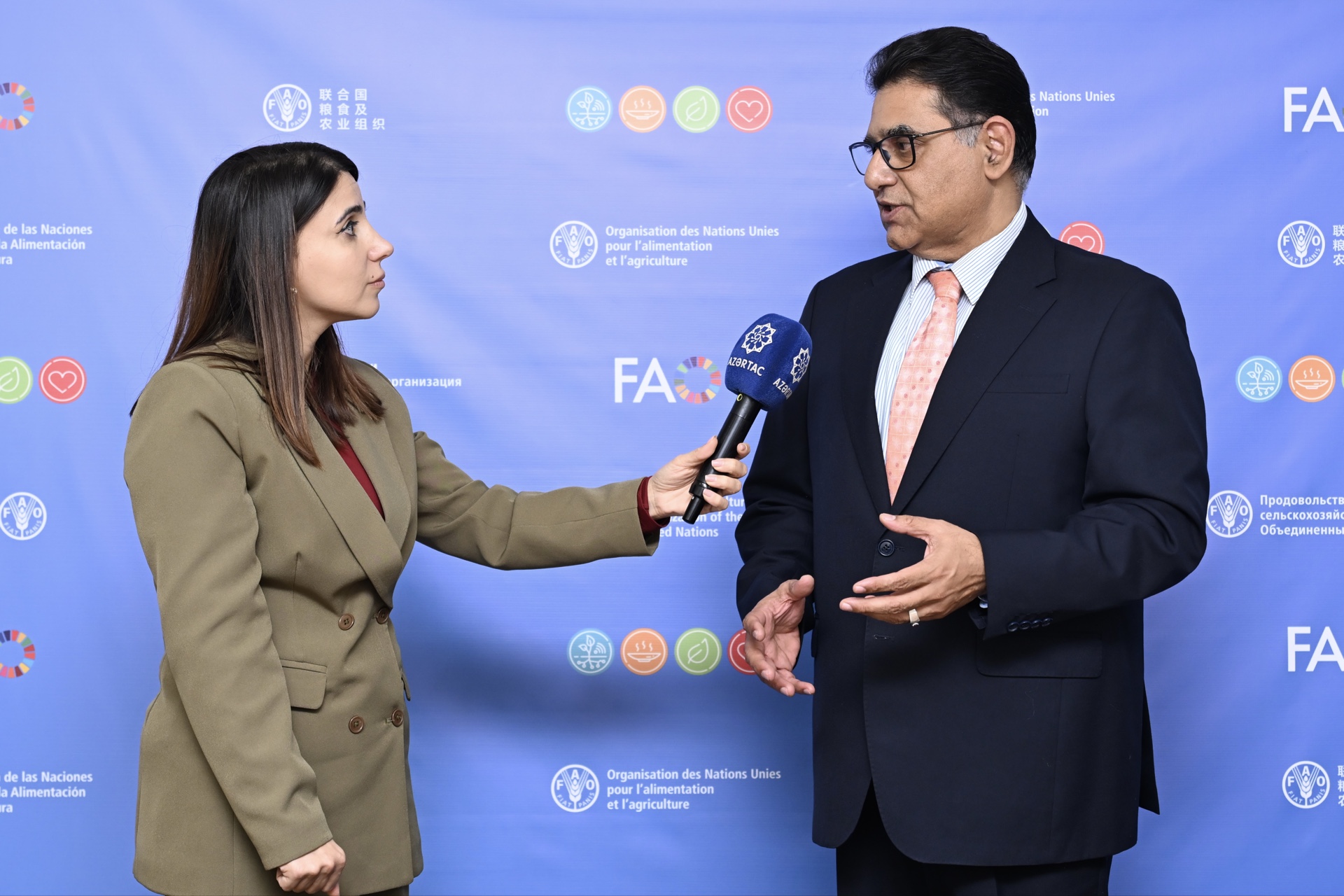
In an interview with the Azerbaijan State News Agency (AZERTAC), Muhammad Nasar Hayat, Representative the UN Food and Agriculture Organisation (FAO) in Azerbaijan, highlighted the current stance and prospects for development of the agricultural sector in Azerbaijan, key areas of cooperation with FAO, supporting the small farmers, digitalization of agriculture, and the implementation of innovative solutions.
- Mr. Hayat, how would you describe the current state and development dynamics of agriculture in Azerbaijan?
- I think agriculture is very important for Azerbaijan for a number of reasons. You know, it contributes about 7% to the national GDP, but at the same time it employs about 38% of our workforce. So that makes it a source of livelihood for 38% of the Azerbaijan's working age people.
But it's not just limited to that, because agriculture in any country helps feed 100% of its population. So we all need a farmer every day, three times a day, for our breakfast, for our lunch, and for our dinner. So that is the importance of agriculture for any country.
But if we look at Azerbaijan specifically, agriculture is important because it supports the national agenda of economic TE, the national commitment of sustainable development, and also it helps us preserve a way of life, a culture, a large number of 45% of Azerbaijan's population lives in the rural areas.
Agriculture also preserves their culture, their lives, their livelihoods and the way they have lived for thousands of years. So that is the situation of agriculture in Azerbaijan on as a whole, but if we look at the situation, the sector faces a number of challenges.
And the first and foremost that I would like to highlight here is the climate change, the water scarcity, the way the temperatures are changing, the way the soil health is deteriorating. Therefore, these are some of the challenges, but the agricultural sector is also a very, very important area for Azerbaijan.
So, bringing all these aspects together, the FAO's strategic framework and the aspirations of the Azerbaijani government, I think the agriculture sector is moving in the right direction. Now what do we need to do right now is most probably to support the small farmers a lot more to adapt to these modern times and challenges.
And the first and foremost that I would like to highlight here is the climate change, the water scarcity, the way the temperatures are changing, the way the soil health is deteriorating. Therefore, these are some of the challenges, but the agricultural sector is also a very, very important area for Azerbaijan.
So, bringing all these aspects together, the FAO's strategic framework and the aspirations of the Azerbaijani government, I think the agriculture sector is moving in the right direction. Now what do we need to do right now is most probably to support the small farmers a lot more to adapt to these modern times and challenges.
- On what principles and priorities the cooperation between FAO and Azerbaijan is built?
- I think the development agenda or the FAO's strategic framework is defined by the member countries. And Azerbaijan is a very important member country of the FAO since it became the member. Now within that, the FAO's strategic focus is on better production, better nutrition, better environment, and a better life, leaving no one behind. Now this is our strategic vision for everywhere.
Now if we translate that into what Azerbaijan's agriculture sector is doing right now, on the production side, the government is focusing a lot more on developing climate resilient, inter-agricultural system, greener transition of the agri-food systems, and on the nutritional side, we see that there is a drive for food diversification beyond lamb and beef. Now I see a lot more emphasis on vegetables and fruits and Azerbaijan produces a very good, high value vegetable and fruits.
- Could you tell us about the most significant and relevant FAO projects currently being implemented in Azerbaijan in the context of challenges related to climate change, declining water resources, and land degradation?
- I think climate-related agricultural activities has been at the center of FAO's work in Azerbaijan for some time. Now, it really gave a very serious impetus to the work that we were already doing. By hosting COP29, signing the methane pledge, making a commitment to reduce its greenhouse gases emission, Azerbaijan has become a player in global discussions and negotiations, as well as the regional leader in climate change adaptation.
To adapt to climate change and some of the activities that we are already undertaking is one on developing the land degradation neutrality.
Now, if we are using the land, we need to use land as a sustainable source. The land that I am using today for my farming, my grandchildren and my great-grandchildren should also be able to use it because I am a custodian for something that I need to pass it on to them.
So, for land degradation neutrality, we have a project that primarily focuses on the Epsilon region. We are also looking at supporting some of these protected areas. Now these protected areas are the source of conservation of biodiversity. And biodiversity conservation is a very, very important aspect, because with changing climate, that we may lose many of the bio resources that we have in our country.
- What are FAO’s plans for expanding cooperation with Azerbaijan in the areas of agricultural digitalization, the introduction of innovative agritech solutions, and the use of artificial intelligence?
- I think digitalization in agriculture is really the way forward for us because in the 60s we saw that there was a green revolution which was based on genetics, plant genetics. Now, in the current times, we look at the technological advancements, but especially using the AI.
Now, agriculture is something that can really make use of digital tools. And by digital tools, I really don't mean high-end, very high-end digital tools. We, many of these farmers and people have smartphones. Therefore, can we use smartphone as a source of information, which can be on climate, which can be on market trends, which can be on rainfall, temperature, whatever?
So that is really the way forward for agriculture in times to come. And ideally, I would love to see a day when there is an AI agent that is helping the farmers, giving them real-life, real-time, real-location advice.
However, that needs a lot of hard work and commitment and resources. So maybe in Azerbaijan it will take us a little bit of time to get there.
On the other hand, the Ministry of Agriculture right now is using a lot of digital technology to advance agriculture, which also includes identifying the farmers who need the assistance the most, also identifying the verification processes that will help them release subsidy amount to the farmers.
So, the digital tools are already in use, but how can we take them forward is something that we really need to look at, and especially in the context of small farmers in Azerbaijan. I think small farmers are the backbone of global food systems.
And for climate change, really we do not understand the impact of climate change on agricultural system because it's a slow incremental process and within that slow incremental process people get used to it.
But for somebody who lives in an urban area, increase in temperature means they decrease the temperature on their air conditioning. But what does this mean for a farmer is completely different.
The plants are living beings like you and I. So when the temperatures change, the plants genetically start behaving differently. You know, why do we see that when the spring starts, the plants start sprouting leaves? Because that's the genetics in the plants. So if the temperatures change that confuse the plants, that's one. If the temperature changes, the requirement for water and nutrition changes.
If the temperature changes the disease and pests that attack the plants also changes. So with the change in temperature only we are looking at a large number of impact on the agriculture system. On the other hand the change in temperature also impacts the water and water is the most crucial input for any agricultural activity. So, if we have less water, less rainfall or rainfall at the wrong time even, that impacts agriculture.


