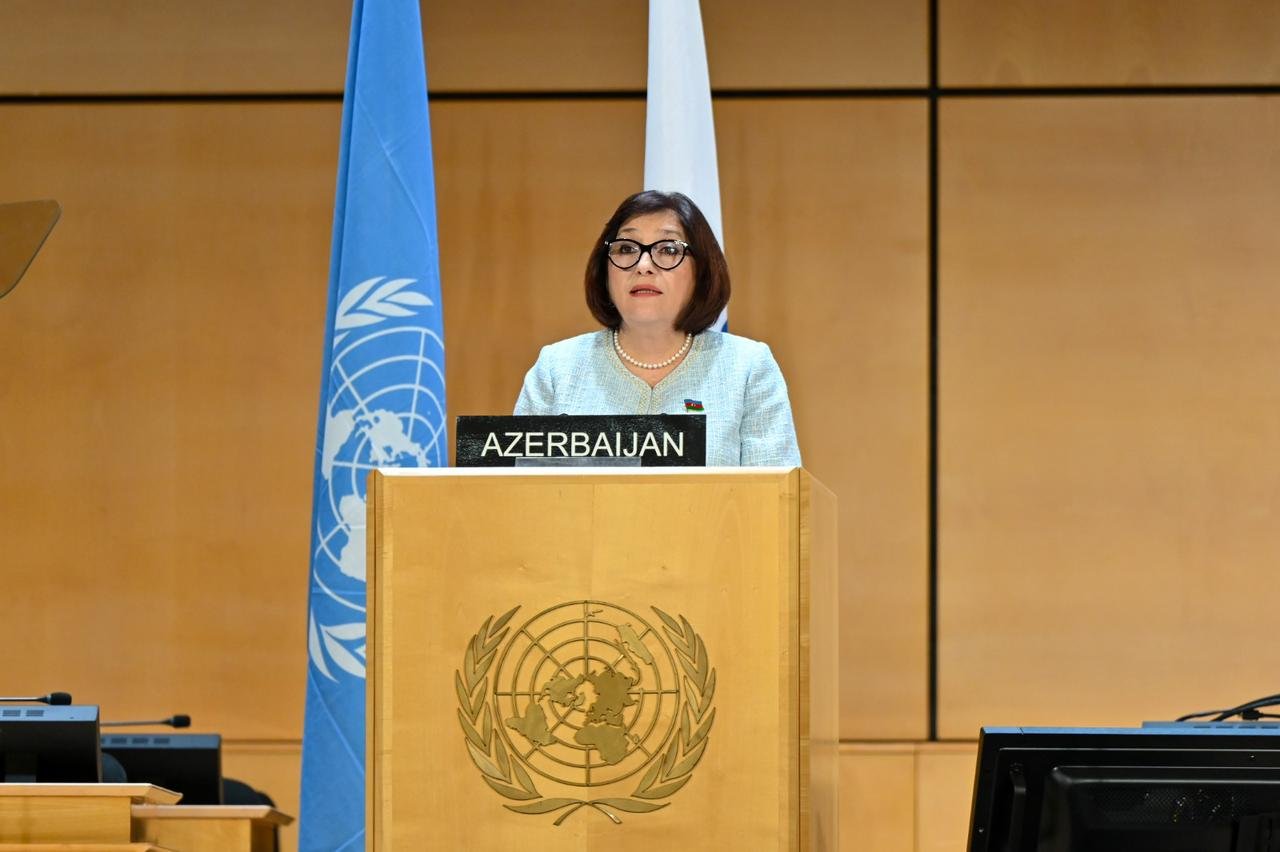

Speaker of Azerbaijan’s Milli Majlis addresses 6th World Conference of Speakers of Parliament
Speaker of Azerbaijan’s Milli Majlis Sahiba Gafarova participated in the 6th World Conference of Speakers of Parliament as part of her working visit to Geneva on July 29.
In her address at the event, the Speaker noted that the conference has become an effective and successful platform for dialogue among parliamentary speakers, contributing to the development of the future agenda for inter-parliamentary cooperation.
Sahiba Gafarova expressed regret that the world has faced numerous negative changes since the last conference. While the previous conference focused primarily on COVID-19 and ways to combat it, the number and complexity of global challenges have increased significantly, necessitating urgent and resolute actions. According to the Speaker, the absence of coordinated responses in many instances has further exacerbated these challenges. As a result, the world today has become more fragmented, tensions have escalated, and progress has declined. This troubling reality stems from the erosion of effective international cooperation and solidarity, which are the foundation of multilateralism. She emphasized that “we are drifting away from the understanding that global threats can only be addressed through collective action and shared responsibility”.
Touching on the topic of UN reforms, the Speaker stated that a robust and inclusive multilateral system with the UN at its core has the potential to provide genuine and long-term solutions to current challenges. However, discussions on reforming the UN system to enhance its effectiveness are still ongoing. As Sahiba Gafarova emphasized, any reforms must lead to a system in which the voices of not only individual states but all countries and peoples are heard. The standards and principles of international law must be upheld, double standards rejected, and adopted decisions implemented. Only by adhering to these principles can the goals of peace, justice, and prosperity for all be achieved.
Addressing the growing importance of parliamentary diplomacy, Speaker Gafarova noted that it is gratifying to see parliaments’ commitment to multilateralism and cooperation. Active participation in the work of the Inter-Parliamentary Union, including at this conference, reflects a shared vision and determination.
The Speaker also commended the close cooperation between the Inter-Parliamentary Union and the United Nations, and their efforts to ensure that the voices of parliaments are heard in global discussions. However, she stressed that further efforts are needed.
She underlined that national parliaments should become key participants in the multilateral system, as failures primarily affect the people they represent. As elected representatives, parliamentarians must take a direct role in renewing multilateralism, thereby making the system more democratic and responsive. One practical step in this direction could be the initiation of an inter-parliamentary dialogue on reforms that better reflect the needs and interests of citizens.
According to Speaker Gafarova, ensuring peace, justice, and prosperity for all goes beyond institutions and accords. At its core lies the need to build trust, confidence, and mutual understanding among people. Diversity should not be viewed as a barrier but as a unifying factor. Promoting dialogue between cultures plays a significant role in achieving shared objectives.
She emphasized that the “Baku Process,” launched at the initiative of President of the Republic of Azerbaijan Ilham Aliyev in 2008 - with the “World Forum on Intercultural Dialogue” as a key component - has been recognized by the UN as one of the main global platforms for intercultural dialogue.
The Speaker noted that the Azerbaijani Parliament organized an Inter-Parliamentary Conference on the sidelines of the 5th session of the Forum in May last year, ensuring that the parliamentary perspective was reflected in discussions on intercultural dialogue. In this context, she proposed including the theme of intercultural dialogue in the future agenda and activities of the Inter-Parliamentary Union.
Gallery