

Azerbaijani people celebrate the ancient holiday of Novruz
Beneath the snow’s white blanket, the golden Novruz flower emerges, while a vivid blue violet rises from beneath the bushes. With every touch of sunlight, warmth breathes into Mother Earth, softening her furrowed face. Trees begin to bud, and fields and plains are clothed in green, woven with delicate patterns. A swallow perches on a freshly sprouting branch, singing its gentle song.
In Azerbaijan, where sovereignty and territorial integrity have been fully restored under the leadership of President and Victorious Commander-in-Chief Ilham Aliyev, Novruz is welcomed with great celebration and joy. Festive bonfires are lit across the country, including in Fuzuli, Jabrayil, Zangilan, Gubadli, Shusha, Lachin, Kalbajar, Aghdam, Khankendi, Khojaly, Khojavend, and Aghdara. Gathering around these bonfires, residents look forward with hope to the blessings that spring will bring to their homeland.
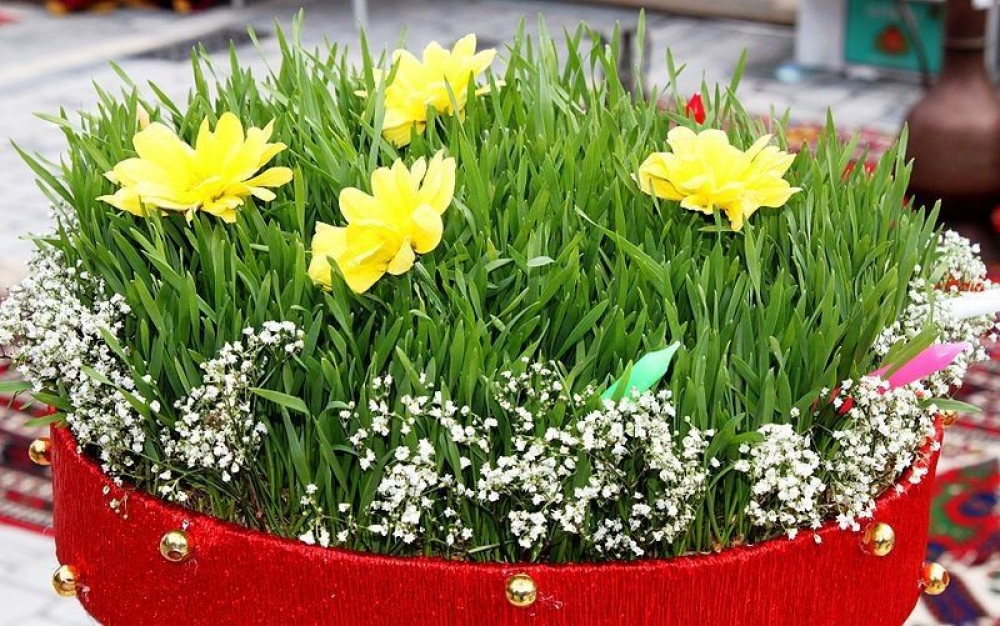
Nature awakens and breathes with new life. At every dawn, the Sun lights a glowing red bonfire in the sky. As the air grows warmer, the fragrance of spring spreads everywhere. In the mountains, frozen rivers and waterfalls melt, turning into lyrical ashugs filled with melody; buds swell, and flowers gently unfold. Showers descending from drifting clouds scatter light across the world, as the sky weaves a seven-hued tapestry. The presence of spring is felt everywhere. Lush green samani, grown in small dishes, serves as a herald of the season’s arrival.
In Azerbaijan, spring will arrive this year on March 20 at 18:45. At that moment, day and night will be perfectly balanced, with the Sun rising in the east and setting in the west. Traveling along the ecliptic, the Sun will cross the equator, moving from the Southern Hemisphere into the Northern Hemisphere. This marks the beginning of spring in the north and autumn in the south.
AZERTAC highlights the history of Novruz, the ancient national holiday of the Azerbaijani people, along with its significance in cultural memory and the traditions associated with its celebration.
An ancient holiday of the Turkic world
Novruz has a long history dating back thousands of years. Deeply embedded in the worldview of ancient Turkic and Eastern peoples, the holiday has grown richer over time through the influence of different cultures. In Azerbaijan, Novruz has become an inseparable part of the nation’s spiritual and cultural identity.
Novruz is the most ancient and beloved holiday of the Azerbaijani people, celebrating spiritual values, traditions, and the spirit of togetherness. The term “Novruz,” derived from Persian, means “new day.” Historically, it has been observed as the beginning of spring and the time when day and night are equal. People have long associated the renewal of nature with the renewal of human life, making the first day of spring a symbol of new beginnings. The Kyrgyz call it Nooruz, Uzbeks — Növroz, Bashkir Turks — Nevruz, Tatars — Navruz, Chuvash — Naurus, Crimean Turks — Nevrez, and Western Thracians — Mevris.
The origins of Novruz and its associated legends date back to antiquity. Scholars present two main theories regarding its origin. One considers it the oldest nature festival of the Turkic peoples. Chinese historical records indicate that the Huns celebrated spring festivals on March 21. The Uyghur Turks also held spring ceremonies closely aligned with modern Novruz traditions. Additionally, Gobustan rock carvings depict year-changing rituals from even earlier periods. In the Turkic epic “Ergenekon,” the return to the ancestral homeland is linked to the first day of spring.
The second approach relates to rituals rooted in Iranian mythology. Written sources from the 11th century, notably Ferdowsi’s “Shahnameh,” refer to Novruz, while later Persian literary works elaborate extensively on the holiday.
Although Novruz was celebrated as early as 350 BC during the Achaemenid period, its origins date back even earlier, predating Zoroastrianism. Its customs—lighting bonfires, growing samani, performing Kosa-Keçəl plays, invoking the Sun, visiting neighbors with fragrant herbs, settling disputes, commemorating the deceased, dyeing and playing with eggs, preparing trays of seven offerings, cleaning homes and yards, cooking on the hearth, tossing hats, hanging pouches from chimneys, gathering around the fire, and practicing ear-reading—reflect the deep connection between humans and nature and the festive spirit of Novruz.
Welcoming Novruz
In the hearts of the Azerbaijani people, Novruz is not merely a date on the calendar—it is a way of life. As spring approaches, people are filled with hope, joy, and anticipation for new beginnings. During this time, they clean their homes and arrange their yards, symbolically leaving behind the hardships of the past year.
The approach of Novruz is felt weeks in advance. According to the folk calendar, the holiday is preceded by four Tuesdays: Water, Fire, Wind, and Earth. Each is marked by specific rituals and customs, reflecting ancient reverence for natural elements. Water Tuesday symbolizes the origin of life; Fire Tuesday signifies warmth and light; Wind Tuesday represents movement and renewal; and Earth Tuesday embodies the awakening of nature.
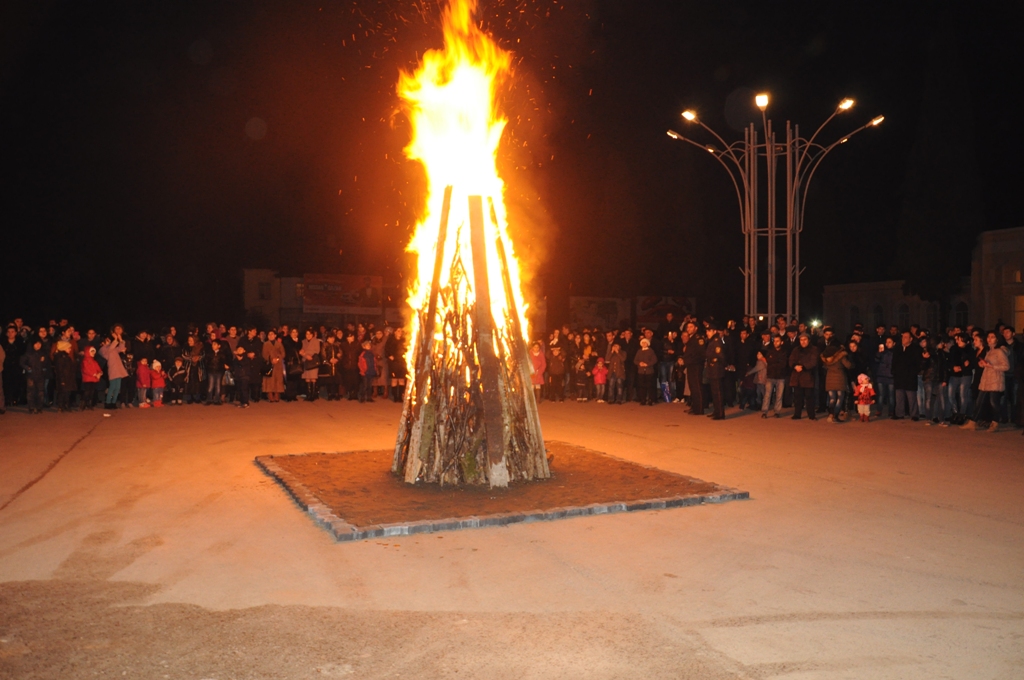
One of the most vibrant traditions of Novruz is the lighting of bonfires. Across the country, people light fires and jump over them, believing that their troubles will be burned away and their pain and sorrow will fade. This ritual symbolizes purification and renewal. The glow of the fire dispels darkness, filling hearts with hope and joy.
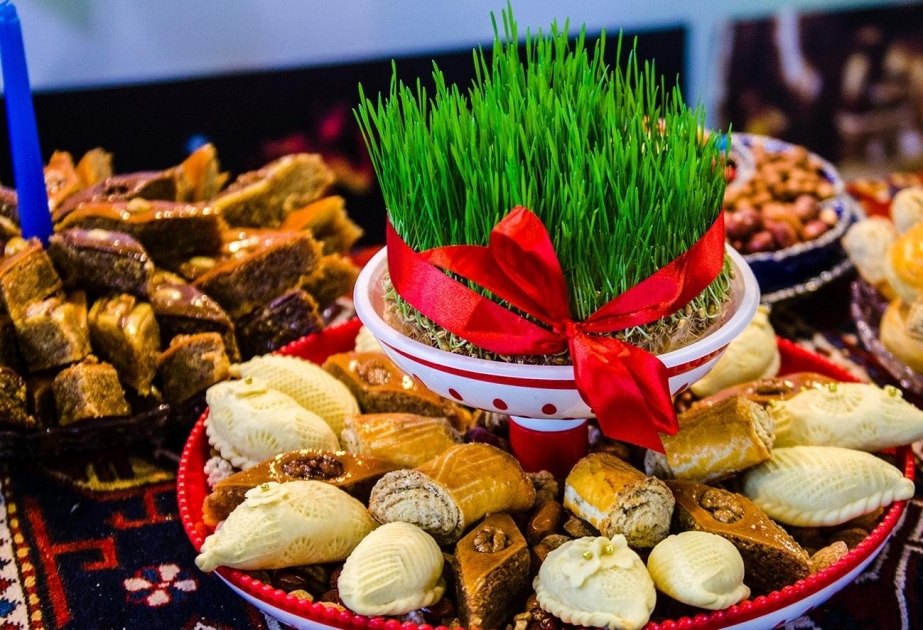
The festive table is one of Novruz’s most important symbols. At its center is green samani, representing renewal, abundance, and prosperity. The table is adorned with traditional sweets—paklava, shekerbura, goghal, and badambura—each carrying symbolic meaning. Paklava, shaped like a star, represents the universe and the Sun, while goghal symbolizes the Sun’s warmth.
During Novruz, people enjoy various games and festive activities. Children throw hats at doors, engage in egg games, and sing cheerful songs. These celebrations foster unity, joy, and a sense of community.
Azerbaijani people have played a vital role in shaping and preserving the Novruz holiday. National Leader Heydar Aliyev, who highly valued national traditions, including Novruz, said: “Novruz is one of the holidays that our people have protected and cherished for centuries. Its history, like that of the Azerbaijani nation, has experienced many challenges and fluctuations. Celebrating this ancient holiday at the state level in our independent republic demonstrates our deep respect for our national roots, traditions, and history, as well as our firm connection to them.”
An internationally celebrated folk holiday
Novruz, a symbol of abundance, prosperity, and kindness, is now internationally recognized by UNESCO. Thanks to the efforts of Mehriban Aliyeva, First Vice-President of Azerbaijan and President of the Heydar Aliyev Foundation, Novruz was inscribed on UNESCO’s Representative List of the Intangible Cultural Heritage of Humanity. On February 23, 2010, the UN General Assembly declared March 21 as International Novruz Day.
Novruz is celebrated by over 300 million people worldwide as the beginning of the New Year. For more than 3,000 years, it has been observed across the Balkans, the Black Sea region, the Caucasus, Central Asia, the Middle East, and beyond.
For the Azerbaijani people, as for many Turkic nations, Novruz reflects the fullness of national and spiritual identity. Celebrated at the societal level, it has become an integral part of cultural consciousness. Novruz conveys shared values and sentiments and plays a vital role in preserving and sustaining Turkic cultural heritage as an ancient folk festival.
Novruz, heralding the arrival of spring, celebrates the awakening of nature, the renewal of life, and the triumph of hope. It stands as a spiritual bridge reflecting the people’s ancient roots, vibrant culture, and national spirit—a timeless philosophy of life that endures through generations.


